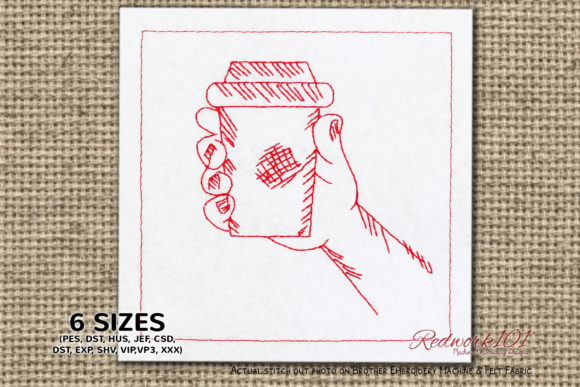
Coffee Cup in Hand Design Review
As an experienced embroidery designer who has spent years helping small businesses refine their visual identity through custom apparel, I recently had the opportunity to review a specific design file titled Coffee Cup in Hand. This piece is categorized under Tea and Embroidery, but its potential extends far beyond a simple kitchen decoration. For owners of cafés, boutiques, handmade shops, and creative studios, selecting the right digital embroidery file is a critical business decision. It is not merely about adding a pretty image; it is about investing in brand recognition, professional presentation, and customer trust.
The first impression of Coffee Cup in Hand is one of warmth and approachability. The description highlights that this is a lovely redwork embroidery. Redwork, characterized by single-color outlines often in red or black, immediately signals a rustic, handmade aesthetic. In the crowded marketplace of Etsy sellers and craft businesses, this style stands out because it feels authentic rather than mass-produced. When a customer sees a tote bag or an apron with this design, they are likely to perceive the brand as artisanal and personal. This visual personality is essential for businesses that want to convey a sense of care and craftsmanship in their products.
Real-World Application for Small Business Merch
Imagine a local coffee shop looking to upgrade their staff uniforms or create a line of branded merchandise. Coffee Cup in Hand could serve as the perfect accent for chest logos on work shirts. Its clean lines make it versatile enough to sit alongside a larger company logo without overwhelming the wearer. However, the true value of this design lies in its adaptability across various product types. For a bakery or a florist, placing this embroidered patch on a canvas tote bag creates a memorable gift for customers. It transforms a simple shopping bag into a walking advertisement for the brand.
I have seen many small business owners struggle with finding designs that work well on curved surfaces like caps. Because Coffee Cup in Hand relies on a simple outline structure, it has a high probability of stitching cleanly on the front of a baseball cap or a beanie. The lack of heavy fill areas reduces the risk of puckering, which is a common issue when embroidering on structured hats. Furthermore, for businesses selling custom apparel, this design can be used as a sleeve detail or a back-of-neck label, adding a subtle touch of branding that loyal customers will appreciate.
The versatility also extends to functional items. An apron embroidered with this motif is ideal for a chef, a barista, or a crafter hosting workshops. It adds a layer of professionalism to the workspace while maintaining a friendly atmosphere. When used as a product packaging accent, such as on a tag attached to a handmade soap or a candle, it reinforces the handmade nature of the item. This consistency between the physical product and the branding materials is what builds buyer engagement and encourages repeat purchases.
Evaluating Suitability for Embroidered Patches and Uniforms
One of the most popular uses for digital embroidery files is creating custom patches. Coffee Cup in Hand appears well-suited for this purpose due to its defined edges. When converting this machine embroidery design into an embroidered patch, the redwork style allows for easy trimming around the perimeter without leaving loose threads. These patches can be ironed onto denim jackets, backpacks, or corporate polos, offering a durable way to display brand identity. Staff uniforms benefit significantly from such accents, as they create a unified look that fosters team spirit and makes employees easily identifiable to customers.
However, the success of these applications depends heavily on the technical execution of the embroidery file. Before committing to a large production run, it is vital to consider where the design might face challenges. Small patch sizes can sometimes cause fine details to disappear or merge together. If the original design contains very thin lines, they may become indistinguishable when stitched at a size smaller than two inches. Similarly, applying this design to dark uniforms requires careful consideration of thread colors. A standard redwork pattern typically assumes a light background; using it on dark fabric without adjusting the stitch density or adding a contrasting outline could result in a muddy appearance.
Fabric texture is another critical factor. While this design works beautifully on smooth cotton or linen for kitchen towels and tablecloths, textured fabrics like heavy wool or coarse burlap can distort the stitches. The stitch density must be appropriate for the material being used. High-density areas are prone to pulling on lightweight fabrics, leading to a wrinkled finish that looks unprofessional. Therefore, understanding the limitations of the design relative to the target fabric is crucial for maintaining a premium finished product.
Strategic Design Notes for Production Success
To ensure that Coffee Cup in Hand delivers the desired results for your commercial embroidery projects, there are several practical steps every designer and business owner should take. First, always test the design in black and white before finalizing color choices. This helps you evaluate the composition and spacing without the distraction of color contrast issues. If the design holds up well in monochrome, it is likely to translate effectively into other thread colors.
Inspecting the spacing and confirming the hoop size are non-negotiable steps. You must verify that the design fits within the intended hoop dimensions to avoid stitching errors. Additionally, testing on real fabric is superior to relying solely on digital mockups. A printable mockup is excellent for client approval, but it cannot replicate the tactile quality of thread on cloth. Run a sample on the actual fabric you plan to use, ensuring you employ the proper stabilizer to support the material during stitching. This prevents distortion and ensures the design sits flat and crisp.
Comparing this design asset beside other elements of your brand identity is also wise. Does the style of Coffee Cup in Hand match the font and imagery used on your website and social media? Visual consistency is key to building a cohesive brand. If your brand is modern and sleek, a rustic redwork design might feel slightly off unless intentionally styled as a "craft" element. Finally, confirm commercial licensing before using this digital embroidery file for any merchandise sales. Ensuring you have the legal right to produce and sell items featuring this design protects your business from potential copyright issues.
Maximizing Brand Value Through Quality Embroidery
Ultimately, the choice to use Coffee Cup in Hand is a statement about your commitment to quality. When executed correctly, this design elevates the perceived value of your products. Customers are willing to pay more for items that look professionally finished. Whether it is a custom apron for a culinary school, a branded tote bag for a festival, or a patch for a uniform, the attention to detail matters. By carefully reviewing the technical aspects and aligning the design with your brand strategy, you can turn a simple embroidery file into a powerful tool for business growth.
For those looking to expand their small business merch line, Coffee Cup in Hand offers a charming and versatile option. It bridges the gap between traditional craftsmanship and modern branding needs. By following the recommended testing protocols and considering the specific constraints of different fabrics and applications, you can leverage this design to create memorable, high-quality products that resonate with your audience. Remember, the goal is not just to decorate, but to build a lasting connection with your customers through thoughtful design and superior execution.